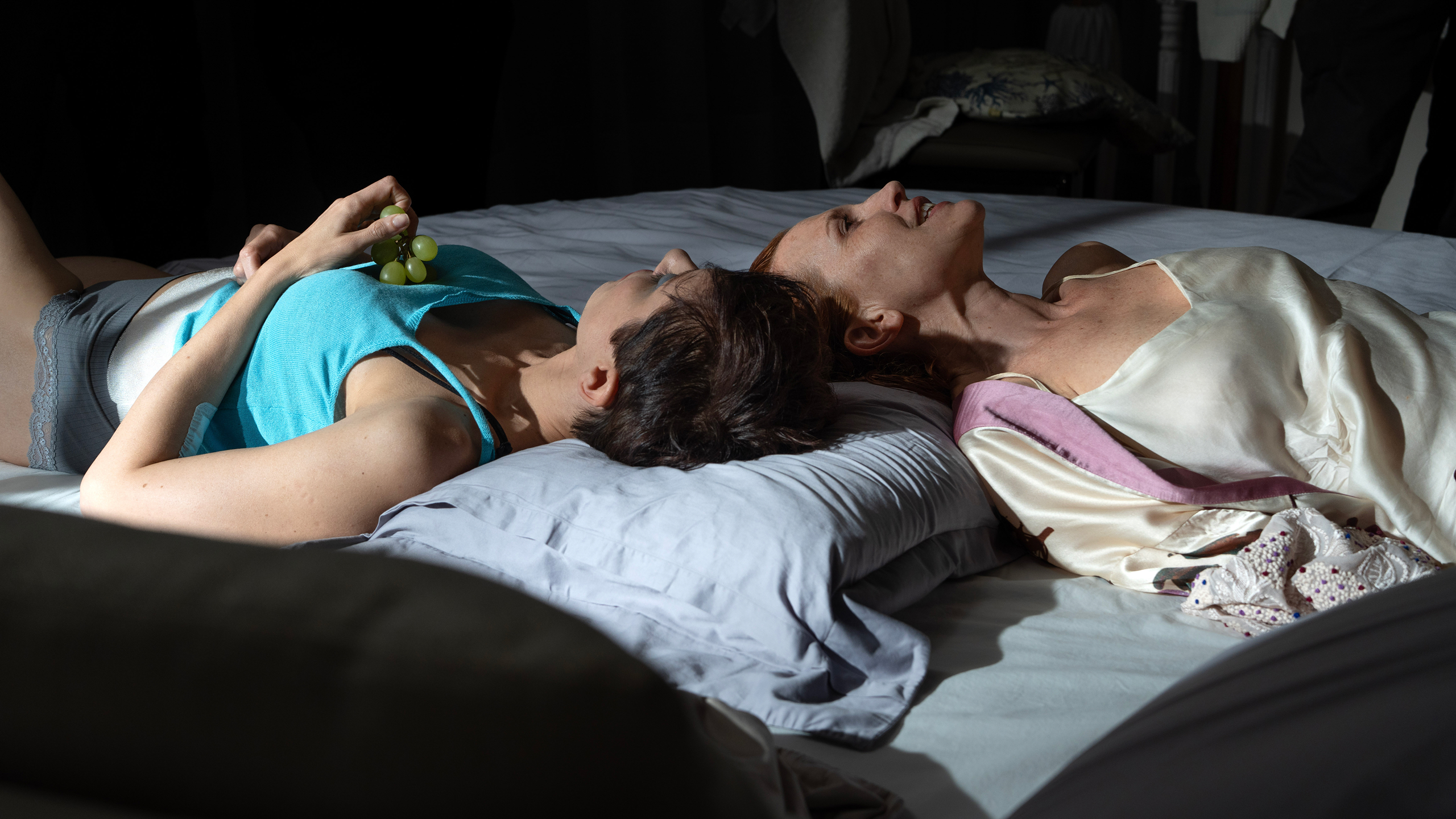
Erica Weber, a successful writer, lives detached from herself and her profession until she notices Ros, busy cleaning the library where her latest book will soon be presented. Nothing seems to unite the two women except—but we only learn this later—the unconscious attraction of a shared experience of violence that will later lead them to experience an intimate, ambiguous, and intense complicity. An unexpected narrative development, yet visually anticipated from the very first images by the presence, and later recurring, of Rocco Normanno's painting depicting Judith Beheading Holofernes. An image of crude and prophetic realism that recurs repeatedly and which the director, along with the works of the aforementioned Artemisia Gentileschi, drew inspiration from for the film's conception. From these premises, the story, supported by the remarkable performances of the two lead actresses, Valentina Banci and Désirée Giorgetti, unfolds fluidly and compellingly. The result is a film that deeply reflects on gender violence and its devastating consequences, becoming a narrative mirror of what is foretold by the testimonies of battered women and abusive men who anticipate and guide the viewing experience.
Director Giuseppe Tesi and lead actress Valentina Banci will be present in conversation with journalist Federico Berti.
""Rosamaro" is a film about gender violence, a scourge sadly present in the news
everyday and, sadly, seemingly unstoppable. A difficult topic to
deal with. Director Giuseppe Tesi, without pretense, manages to tackle it without
being dominated by it and without falling into heavy-handed didacticism. What prevails is a
harmonious narrative that shows, with truth and delicacy, the existential
consequences caused by a violence that seems destined to continually
repeat itself and that finds profound, unexpected echoes in the intimacy of the film's
protagonist and her seemingly unlikely alter ego." (Francesca Simoncini, UniFi)


