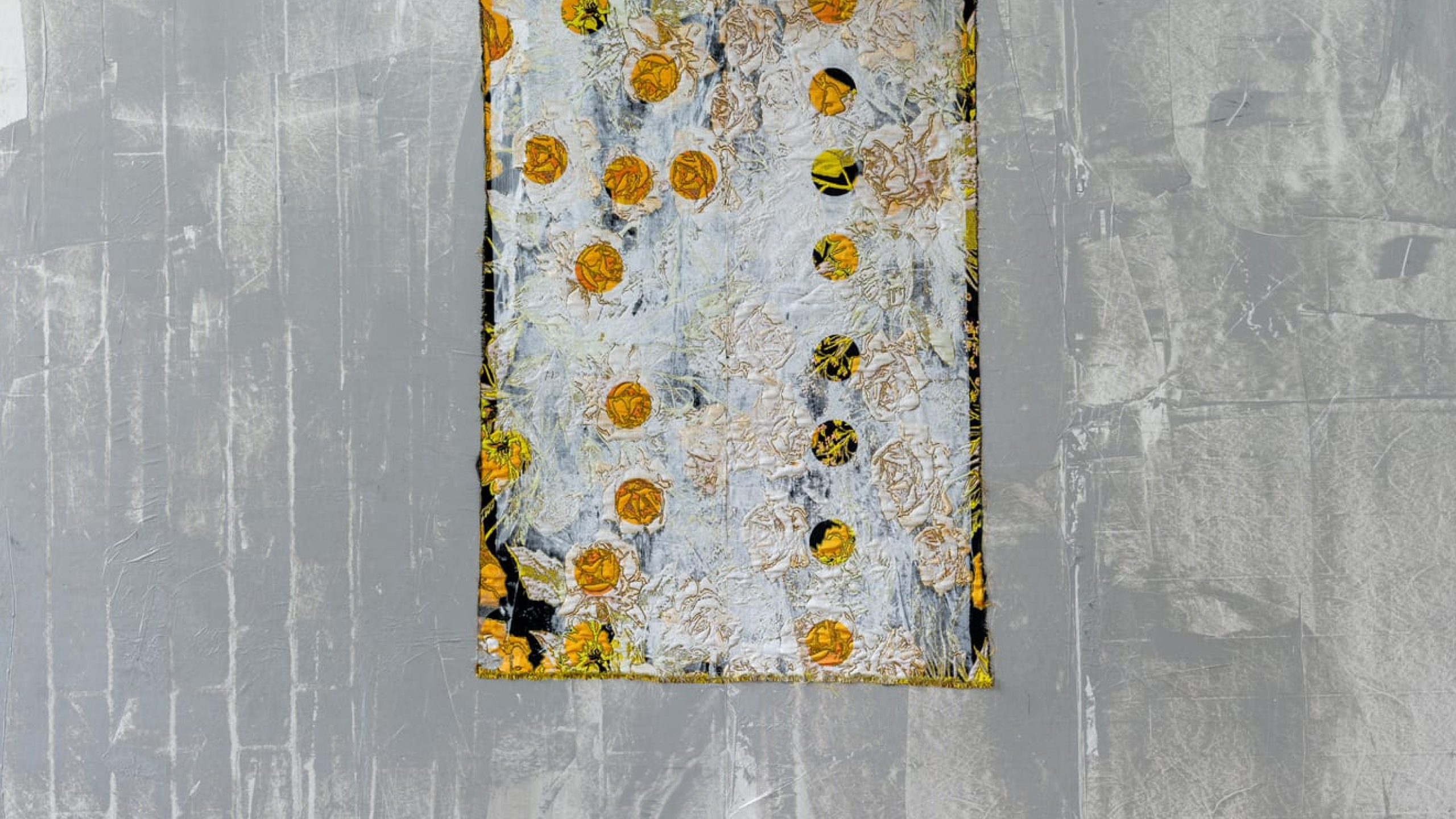
Born in Lecco in 1991 and currently living and working in Zurich, Lorenza Longhi explores the role of ordinary objects and languages of communication in the construction of desire in contemporary Western society. She observes everyday items, such as consumer goods, designer furniture, and fabrics used in fashion, and exposes the strategies used to display and consume them.
Drawing on DIY and imperfect, dysfunctional techniques, Longhi screen prints directly on the printing surface with stencils and recycled fragments, and replicates design elements (such as USM Haller modular units or the camellias typical of Chanel clothing) with makeshift materials, such as cardboard and fabric remnants. Longhi repurposes materials, giving them new life.
Error, accident, and unexpected variation are aspects of her artistic language, in which failure becomes a means of distancing herself from the rhetoric of efficiency.
Excessive ornamentation, trash, and kitsch serve as critical tools. Rather than criticizing capitalism or the seduction of luxury, her work raises awareness of the forms of desire that often enchant us. She plays with glamour, ostentation, and the codes of taste to slow down our desire and render it ambiguous, while simultaneously opening up a space of awareness.
Villa Delizia is Longhi's first solo exhibition in an Italian public institution.
Presented in the Nio Wing, Villa Delizia transforms the space by modifying certain architectural elements, such as the circular windows on the ceiling and the museum's exhibition apparatus. For this exhibition, the artist created ten large canvases using natural and synthetic fabrics in collaboration with local manufacturers.
This exhibition is part of Passaggi: di mano in mano, the Centro Pecci’s 2026 cultural programme. Discover the programme ↗


