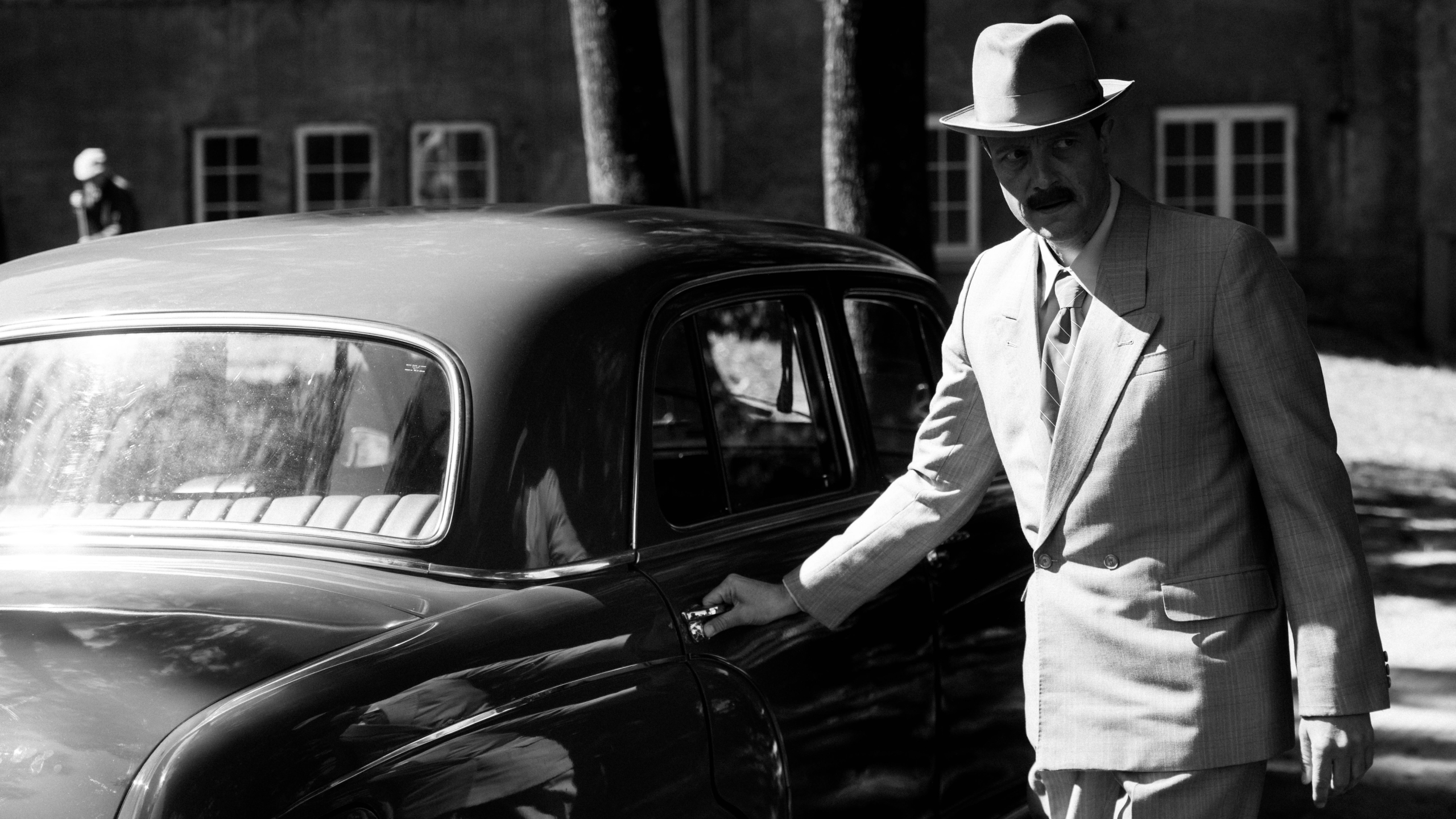
Josef Mengele, thanks to a safety net, managed to reach Latin America, passing through Argentina, Uruguay, and Brazil. While other Holocaust perpetrators were captured (the most sensational case being that of Adolf Eichmann, kidnapped by the Israeli Mossa on Argentine soil), he managed to hide. His son Rolf, however, managed to reach him, intending to hold him accountable for his actions.
"Josef Mengele is, in the new film by Russian dissident Kirill Serebrennikov, like a black hole. He's there, at the center of the frame for most of its two-hour running time, played by a magnificent August Diehl, always wound up like a spring ready to snap, but it's as if we can't penetrate the event horizon to truly see him. We can examine his bones, as the Brazilian medical professor does in the very first scene of the film, and deduce the fundamental passages of his life from those remains. Yet, the most rational, most logical scientific gaze possible doesn't seem capable of fully understanding him. From there, however, we can at least begin the story of The Disappearance of Josef Mengele, out of competition at Cannes 78, in search of the spirit contained in those bones.
[...] Serebrennikov's film seems like a treasure hunt, a series of clues to decipher the figure of Mengele beyond his total adherence to Nazi ideology. However, the clues he provides cannot be read with the eyes of the intellect alone. There is no point in trying to convince a martyr that the Gates of Heaven are not waiting wide open for him. Rolf can ask his father what happened in Auschwitz as many times as he wants, but the answer, no matter how direct, will never be satisfactory. The route to the origins of evil lies in the details, in the way he says goodbye to his father after the death of one of his brothers, in the way he caresses the dog, in the way he embraces his son who is leaving him forever. It is this severed bond with others, this bleeding and festering wound that becomes a threshold, an opening to understanding. Because a black hole can only truly be seen through the light it swallows. Only then can another type of process, this definitive one, begin. (Riccardo Baiocco)


